-

Industry – Domain:
Manufacturing
-

Stack
Python, React, FastAPI, Machine Learning, Predictive Analytics, Recommendation Systems, PostgreSQL, Data Analysis, REST APIs
-

Country
Germany

Our client was a manufacturing company operating a high-volume production environment where finished products needed to be inspected for visible defects before packaging and shipment.
The existing inspection process depended heavily on manual visual checks. Quality-control personnel had to examine products individually and identify scratches, surface inconsistencies, missing components, and other production anomalies. As production volumes increased, maintaining consistent inspection speed and accuracy became increasingly difficult.
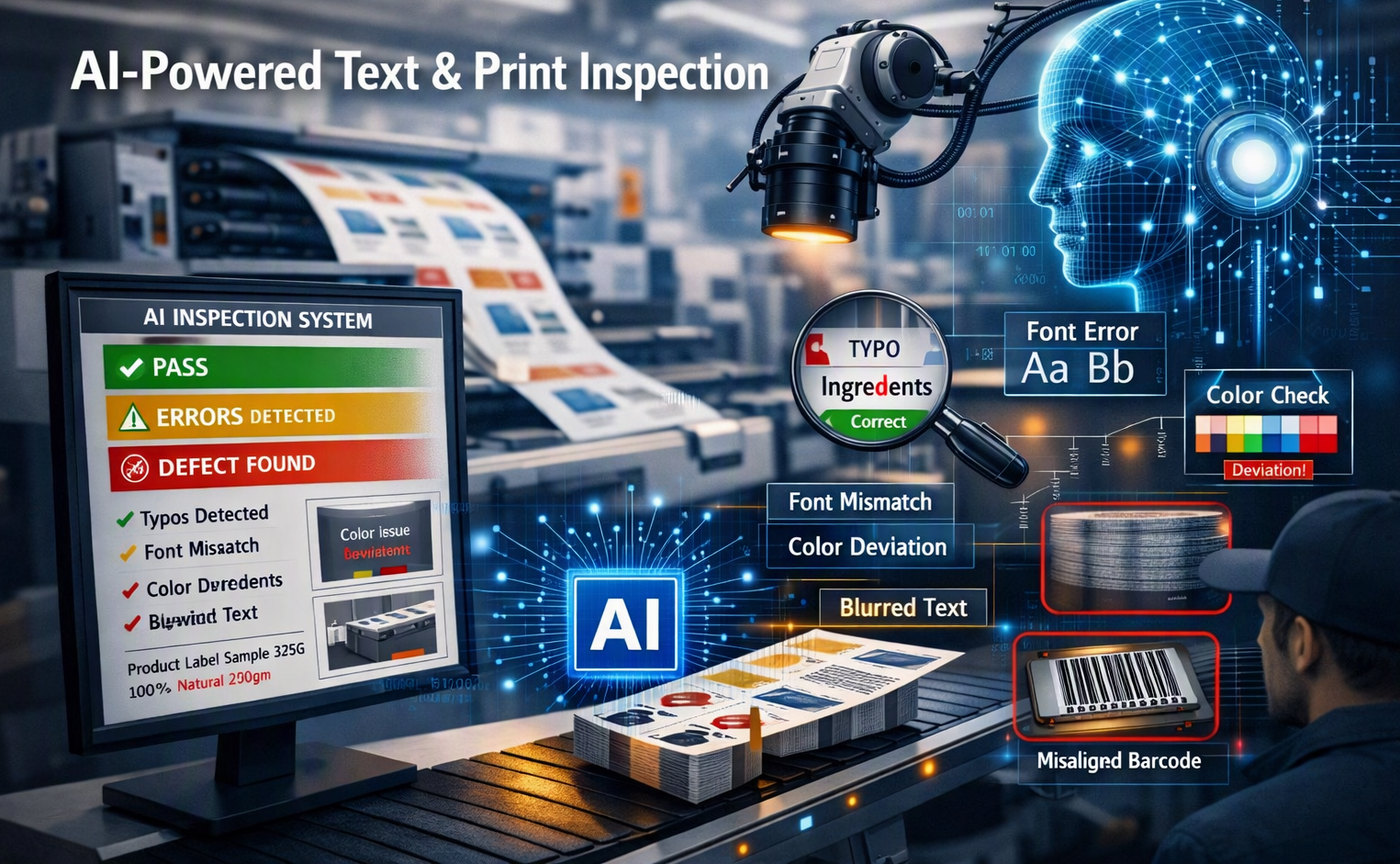
Maven Infotech designed an AI-powered computer vision solution to automate visual inspection and help the quality-control team identify product defects more efficiently. The solution combined object detection, image classification, image processing, AI-powered image analysis, and machine learning with a web-based monitoring application.
The objective was to develop a computer vision system capable of::
The client was facing several operational challenges:
The client therefore required a computer vision solution that could automate repetitive visual analysis while keeping human operators involved in cases requiring additional review.
We first analyzed the client’s production workflow, product categories, defect types, image-capture process, expected processing speed, and quality-control requirements.
This helped define the inspection scenarios, model requirements, review workflow, and system architecture.
Available product images were evaluated for image quality, product variation, defect visibility, lighting conditions, and labeling requirements.
The dataset was prepared for model development through image preprocessing, organization, and classification of relevant product and defect categories.
Machine learning and computer vision techniques were used to develop models capable of recognizing products, identifying relevant components, and detecting visual anomalies.
The architecture was designed to support future expansion into additional product categories and inspection scenarios.
The models were evaluated across different product conditions, orientations, lighting variations, and defect patterns.
The system was optimized for practical reliability, image-processing performance, and integration with the client’s existing workflow.
The platform was designed to integrate with the client’s existing technology ecosystem, including:
The platform was designed with security, reliability, and scalability in mind.
Key considerations included:
The architecture also allowed additional product categories and inspection scenarios to be incorporated as the client’s requirements evolved.
For portfolio-planning purposes, the following illustrative results demonstrate the type of business impact a project of this scope could target:
These figures are sample/illustrative metrics, not historical Maven Infotech client results.
The computer vision solution transformed a largely manual quality-control process into an AI-assisted inspection workflow. By combining object detection, image classification, image processing, machine learning, and AI-powered image analysis, the platform provided a scalable way to process product images and identify potential quality issues. The solution also created a foundation for future capabilities such as additional defect categories, real-time video analytics, expanded product recognition, and deeper production analytics.
Looking to add intelligent personalization or machine learning capabilities to your application? – Maven Infotech can help you design and develop a custom AI solution around your business requirements.
Maven Infotech – India
C/511 – Titanium City Centre,
Nr. Sachin Tower, Prahladnagar,
Ahmedabad: 380 015, India
Phone/WhatsApp: +91-9913612210
Maven Infotech – Netherlands
KvK-nummer – 69580111
NL: +31-(0)20 363 85 50 (Call or WhatsApp)




Follow Us